
Understanding Eyeglass Size: A Comprehensive Guide
Navigating the world of eyewear requires understanding frame measurements, crucial for comfort and vision.
These numbers – lens width, bridge size, and temple length – dictate how glasses will fit your unique facial features.
What is Eyeglass Size and Why Does it Matter?
Eyeglass size isn’t a one-size-fits-all concept; it refers to specific measurements of the frames, ensuring a comfortable and visually optimal experience. These measurements, typically displayed as three numbers (e.g., 52-18-140), define the lens width, bridge size, and temple length.
Why is this important? Incorrectly sized glasses can lead to discomfort, slippage, distorted vision, and even headaches. A proper fit centers the lenses correctly in front of your eyes, maximizing clarity and reducing eye strain.
Furthermore, understanding your eyeglass size is vital when shopping online, where trying on frames isn’t possible. Knowing these numbers allows you to compare frames accurately and select a pair that complements your face shape and provides a secure, comfortable fit. Ignoring these measurements can result in frequent returns and a frustrating shopping experience.
The Three Key Measurements
Determining the correct eyeglass size hinges on understanding three crucial measurements: lens width, bridge size, and temple length. Lens width, measured in millimeters, indicates the horizontal dimension of each lens. A wider lens provides a broader field of vision, while a narrower one might suit smaller faces.
The bridge size, also in millimeters, represents the distance between the lenses, resting on your nose. A properly sized bridge prevents slippage and ensures comfort. Finally, temple length measures the arm of the glasses, from the hinge to the tip, determining how securely they stay on your ears.
These three numbers, when combined, define the overall fit and comfort of your eyewear. Accurate measurements are essential for both prescription and non-prescription glasses, guaranteeing a visually and physically comfortable experience.
Lens Width
Lens width is a fundamental measurement, signifying the horizontal dimension of a single lens, typically expressed in millimeters. This measurement directly impacts your field of vision and how the glasses appear on your face. A standard lens width often falls between 40 and 62 millimeters, though variations exist.
Choosing the correct lens width ensures optimal visual clarity and prevents distortion. Wider lenses are generally preferred for broader faces, offering a more encompassing view. Conversely, narrower lenses suit smaller facial structures, avoiding an oversized appearance.
Accurate lens width measurement is crucial for both aesthetic appeal and visual comfort. Incorrectly sized lenses can cause eye strain, headaches, and an overall unsatisfactory wearing experience. Therefore, prioritizing this measurement during frame selection is paramount.
Bridge Size
The bridge size dictates the distance between the two lenses, resting comfortably on the nose. Measured in millimeters, this dimension significantly influences the glasses’ stability and overall fit. A properly sized bridge prevents slippage and ensures the glasses sit securely without causing pressure or discomfort.

Bridge sizes typically range from 14 to 24 millimeters, with variations depending on the frame style and facial features. Individuals with a high nose bridge may benefit from a larger bridge size, while those with a lower bridge might prefer a smaller one.
An incorrectly sized bridge can lead to several issues, including constant adjustments, skin irritation, and an unbalanced appearance. Prioritizing a comfortable and well-fitting bridge is essential for long-term wearability and visual satisfaction.
Temple Length
Temple length refers to the arm’s overall length, extending from the hinge to the tip that rests behind the ear. Measured in millimeters, this measurement is crucial for ensuring the glasses stay securely positioned without excessive pressure or slippage. A correct temple length prevents discomfort and maintains proper alignment for optimal vision.
Typical temple lengths range from 130 to 150 millimeters, though variations exist based on frame style and individual head size. Longer temples are often suitable for wider heads, while shorter temples may be better for narrower faces.
Incorrect temple length can cause headaches, ear discomfort, or glasses that constantly slide down the nose. Finding the right length ensures a comfortable and stable fit, enhancing the overall wearing experience and visual clarity.

How to Find Your Current Glasses Size
Determining your existing glasses’ size is straightforward. Locate the measurements printed on the inside of the temple arm, or carefully measure your frames with a ruler.
Locating the Measurements on Your Frames
Finding the eyeglass size printed on your frames is often the easiest method. Typically, these numbers are discreetly located on the inside of the temple arm – the part of the glasses that rests over your ear. Look for a sequence of three numbers, separated by dashes, such as 52-18-140.
This sequence represents the lens width, bridge size, and temple length, respectively, all measured in millimeters. Sometimes, the numbers might be subtly etched or printed, so examine the temple arm closely under good lighting. If you can’t find the measurements directly on the frames, don’t worry! You can always measure them yourself using a ruler, as detailed in the following section. Knowing where to look initially saves time and effort in finding your perfect fit.
Using a Ruler to Measure Your Glasses
If your glasses lack printed measurements, a ruler provides an accurate alternative. Ensure you’re using a millimeter ruler for precise readings. Start by measuring the lens width – the horizontal distance across one lens. Next, determine the bridge size, measuring the distance between the lenses where they sit on your nose.
Finally, measure the temple length, from the hinge (where the lens meets the frame) to the end of the temple arm that rests behind your ear. Accurate measurements are key! Double-check each reading to minimize errors. Comparing these measurements to a glasses size chart will help you identify your ideal frame size, ensuring a comfortable and secure fit.
Measuring Lens Width Accurately
Determining lens width requires precision. Position the ruler horizontally across the widest part of one lens, ensuring it follows the curve. Begin the measurement at the very edge of the lens on one side and extend it to the corresponding edge on the opposite side. Avoid measuring across the frame itself; focus solely on the lens surface.
Record this measurement in millimeters. Repeat the process for the other lens to confirm consistency – slight variations can occur. This width, often the first number in a glasses size notation (e.g., 52-18-140), significantly impacts how the glasses sit on your face and your field of vision; Accurate lens width measurement is crucial for a comfortable fit and optimal visual clarity.
Determining the Bridge Size
The bridge size is the distance between the lenses, measured horizontally. Locate the area where the two lenses connect via the bridge. Position your ruler so it aligns with the bridge, starting at the inner edge of one lens and extending to the inner edge of the other. This measurement is vital for ensuring the glasses sit comfortably on your nose without slipping or causing pressure.
Record this measurement in millimeters. The bridge size, typically the middle number in a glasses size notation (e.g;, 52-18-140), influences the overall stability and fit of the eyewear. A properly sized bridge prevents pinching and ensures a secure, comfortable experience. Accurate measurement is key to avoiding discomfort and maintaining clear vision.
Measuring Temple Length
Temple length refers to the arm of the glasses, extending from the hinge to the point behind your ear. To measure accurately, place the ruler along the temple arm, starting at the hinge – where the arm connects to the frame – and extending all the way to the tip. Ensure the ruler follows the curve of the temple for a precise reading.
Record this measurement in millimeters; it’s usually the last number in the glasses size sequence (e.g., 52-18-140). The temple length dictates how securely the glasses stay on your face. An incorrect length can cause slippage or discomfort behind the ears. A proper fit ensures the glasses remain stable during movement and provide all-day comfort. Accurate temple length measurement is crucial for a satisfying eyewear experience.

Decoding the Numbers: A Glasses Size Example
Eyeglass sizes are typically represented as three numbers, like 52-18-140. These correspond to lens width, bridge size, and temple length, respectively, guiding optimal fit.
Understanding a Typical Size Notation (e.g., 52-18-140)
The sequence of numbers found on eyeglass frames, such as 52-18-140, isn’t random; it’s a coded message about the glasses’ dimensions. The first number, 52, represents the lens width, measured in millimeters, across the widest part of one lens. This dictates how much visual real estate the lens provides and impacts the overall look on your face.
Next, 18 signifies the bridge size – the distance between the lenses. A properly sized bridge ensures the glasses sit comfortably on your nose without slipping or causing pressure. Finally, 140 denotes the temple length, which is the length of the arm that extends back over your ear. This measurement is crucial for stability and preventing the glasses from feeling too tight or loose.
Understanding these numbers empowers you to compare frames effectively, especially when shopping online or against a previous pair.
What Do These Numbers Mean for Fit?
The interplay of lens width, bridge size, and temple length directly impacts how glasses feel and function. A correct lens width ensures your pupils are centered in the lens for optimal vision, preventing strain and distortion. An ill-fitting width can cause peripheral vision issues.
The bridge size is vital for comfort; too small, and the glasses will pinch your nose, while too large, and they’ll slide down. Temple length dictates stability – too short, and they’ll feel tight behind the ears, while too long, and they’ll be unstable.
These measurements aren’t just about comfort; they influence the glasses’ aesthetic balance on your face. Properly sized glasses complement your features, while poorly sized ones can appear disproportionate.

Glasses Size Charts & Finding Your Fit
Utilizing glasses size charts, categorized by gender and face shape, is key to a comfortable fit. These charts offer guidance for selecting appropriate frame dimensions.
General Glasses Size Charts by Gender
Generally, men’s glasses tend to be wider than women’s, though this isn’t a strict rule. Average men’s lens widths fall between 50-56mm, with bridge sizes ranging from 18-21mm and temple lengths around 135-150mm. Women’s frames typically have lens widths of 48-54mm, bridge sizes of 16-18mm, and temple lengths between 130-145mm.
However, individual facial features and preferences significantly impact the ideal fit. These are merely starting points. Smaller faces often benefit from smaller frames, regardless of gender. Conversely, larger faces may require wider frames for proportional balance and comfort. It’s crucial to remember that these charts provide general guidelines, and trying on different sizes is always recommended to ensure a secure and comfortable fit. Consider your face width and overall size when selecting frames.
Glasses Size Charts by Face Shape
Selecting frames that complement your face shape enhances your overall look and comfort. For round faces, angular or rectangular frames add definition, while avoiding small or overly round styles. Square faces benefit from rounder or oval frames to soften angles, steering clear of sharp, geometric shapes.
Oval faces are versatile and suit most frame styles, but wider frames can balance proportions. Consider the size relative to your features; larger frames can overwhelm smaller faces. Generally, the width of the frames should equal the widest part of your face. Experimenting with different sizes within these guidelines is key. Remember, these are suggestions – personal preference is paramount. Prioritize comfort and a secure fit alongside aesthetic appeal.
Round Face Shapes
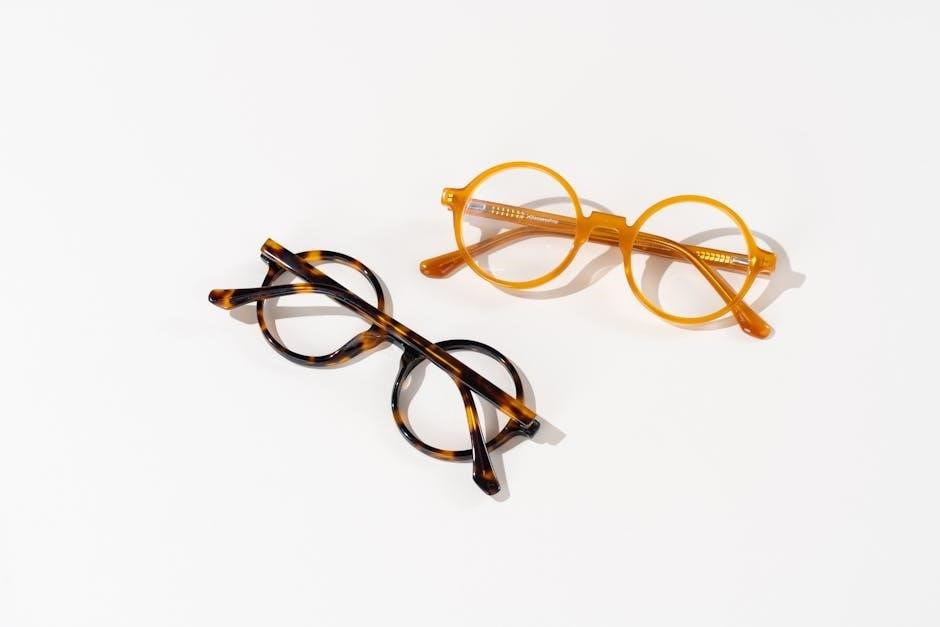
Individuals with round face shapes aim to create the illusion of angles and length. Frames that are wider than they are tall are exceptionally flattering, adding structure and definition. Angular and rectangular frames are ideal, introducing sharp lines that contrast with the softness of a round face. Geometric shapes also work well, providing a modern and defined look.
Avoid round or small frames, as these can accentuate the roundness. Frames with detailing on the temples can also draw the eye outward, creating a more balanced appearance. A strong browline can add definition. Consider a frame width that extends slightly beyond the widest part of your face. Ultimately, the goal is to add contrast and create a more sculpted silhouette.
Square Face Shapes
Those with square face shapes benefit from frames that soften strong angles and add length. Round or oval frames are particularly effective, as their curves contrast beautifully with a square jawline and broad forehead. Frames with a delicate or thin profile can also help to balance the face’s structure, preventing it from appearing too harsh.

Avoid angular or geometric frames that mirror the face’s shape, as this can emphasize its squareness. Frames that sit higher on the nose can also elongate the face. Look for frames with softer edges and details, such as a cat-eye shape or rounded temples. The key is to introduce curves and minimize sharp lines, creating a harmonious and balanced look.
Oval Face Shapes
Considered the most versatile face shape, oval faces can pull off a wide variety of frame styles. However, the goal is to maintain balance and avoid overwhelming the naturally proportionate features. Frames that are as wide as, or slightly wider than, the broadest part of the face generally work well, creating a harmonious aesthetic.
Experiment with different shapes, including rectangular, square, round, and cat-eye frames. Geometric shapes can add a touch of interest, while softer curves complement the oval’s natural contours. Avoid frames that are too small, as they can disrupt the face’s balance. Bold colors and details can also enhance the look, but ensure they don’t overshadow the overall facial harmony. Ultimately, the best frames will accentuate the oval face’s inherent symmetry.

Special Considerations for Different Age Groups
Children and adults require different frame sizes and fits, due to varying facial dimensions and developmental stages.
Proper sizing ensures comfort and optimal vision for each age group.

Children’s Glasses Sizes
Finding the right fit for children’s glasses is paramount, as an ill-fitting pair can cause discomfort and discourage consistent wear. Children’s faces are smaller and more delicate than adults’, necessitating specific size considerations. Generally, children’s glasses have smaller lens widths, typically ranging from 40mm to 50mm, and shorter temple lengths, often between 120mm and 135mm.
Bridge size is also crucial, usually falling between 14mm and 18mm, to ensure the glasses sit comfortably on the nose without slipping. It’s vital to choose frames that are proportionate to the child’s face and don’t overwhelm their features. Flexible materials and adjustable nose pads can enhance comfort and fit. Regularly checking the fit as the child grows is essential, as their facial dimensions change rapidly. Consider frames with durable hinges and impact-resistant lenses for safety.
Adult Glasses Sizes
Adult glasses sizes exhibit a broader range to accommodate diverse facial structures. Standard lens widths typically fall between 48mm and 58mm, though options extend beyond these measurements. Bridge sizes generally range from 16mm to 24mm, influencing how the glasses sit on the nose and overall stability. Temple lengths usually span from 135mm to 155mm, ensuring a secure and comfortable fit behind the ears.

However, these are merely averages; individual needs vary significantly. Gender can also play a role, with women’s frames often having slightly smaller dimensions than men’s. Beyond these core measurements, frame height and overall width contribute to the aesthetic and functional fit. Prioritizing a comfortable fit that doesn’t cause pressure points or slippage is crucial for consistent wear and optimal vision correction.