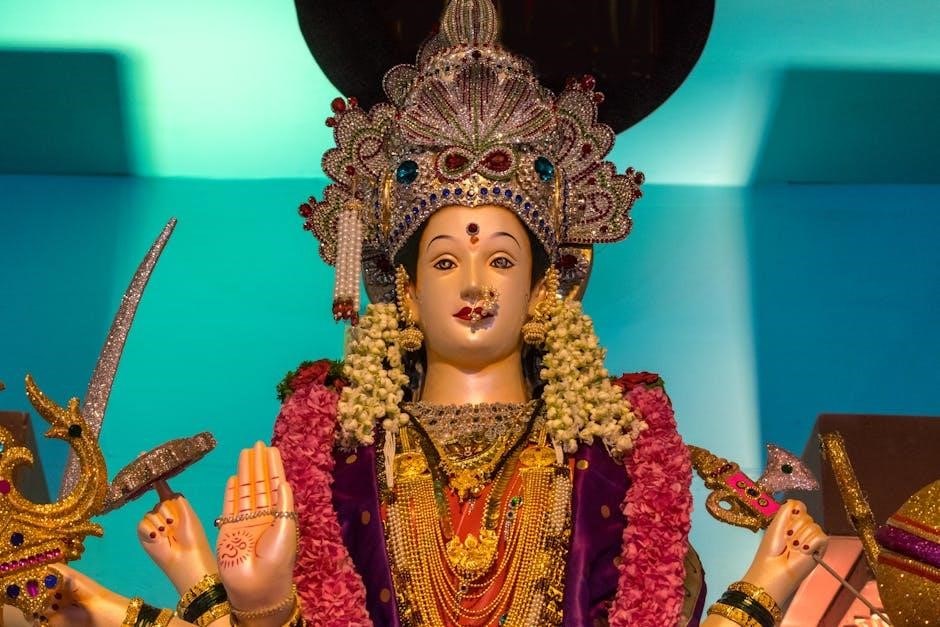
Lalita Sahasranama, a revered Hindu text, offers a profound spiritual journey through 1000 names of the Divine Mother.
English translations, including PDF versions with commentaries, are readily available for devotees seeking deeper understanding.
This stotra, originating from the Brahmanda Purana, is a powerful tool for worship and self-realization.
Resources like the Internet Archive provide access to comprehensive editions, fostering wider accessibility to this sacred scripture.
Swami Tapasyananda’s book on Amazon is a popular resource for English readers.
What is Lalita Sahasranama?
Lalita Sahasranama is a sacred hymn, a stotra, dedicated to Lalita Devi, the Divine Mother, representing Shakti – the dynamic energy of the universe. It comprises 1000 names, each revealing a different aspect of the Goddess.
Found within the Brahmanda Purana, this text isn’t merely a list; it’s a potent mantra for spiritual growth. PDF versions, often including English translations and commentaries, are widely circulated, making it accessible to a global audience.
Resources like the Internet Archive offer downloadable copies, while books by authors like Swami Tapasyananda provide insightful interpretations for English-speaking devotees.
The Significance of 1000 Names
The 1000 names within the Lalita Sahasranama aren’t arbitrary; they encapsulate the entirety of the Divine Feminine, representing Her multifaceted nature and cosmic powers. Each name is a mantra in itself, vibrating with specific energies.
Accessing these names is simplified through readily available PDF versions, often accompanied by English translations to unlock their deeper meanings. Resources like the Internet Archive provide these texts.
Studying these names, as detailed in books like those by Swami Tapasyananda, facilitates a profound connection with the Goddess and accelerates spiritual evolution.
Origin and Scriptural Basis
The Lalita Sahasranama originates from the Brahmanda Purana, a major Hindu text, specifically within its Lalita Purana section. It’s considered a stotra, a hymn of praise, dedicated to Lalita Devi, the Divine Mother.
Scholars trace its roots to ancient Tantric traditions, evolving over time into its current form. PDF versions of the text, often with English translations, are widely accessible online.
Resources like Amazon offer printed editions, while the Internet Archive provides digitized copies for study and devotion.
The Text Itself: Structure and Components
Lalita Sahasranama is structured with a Dhyanam (meditation), Ashtakam (eight verses), and the core 1000 names.
PDF versions often include these sections, aiding focused study and chanting.
Dhyanam (Meditation)
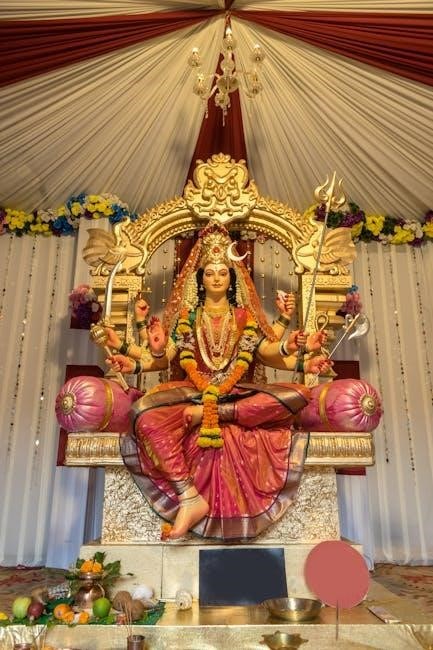
Dhyanam, the initial meditative section of the Lalita Sahasranama, vividly describes the Goddess Lalita’s radiant form. PDF versions frequently present this section first, setting the stage for the names.
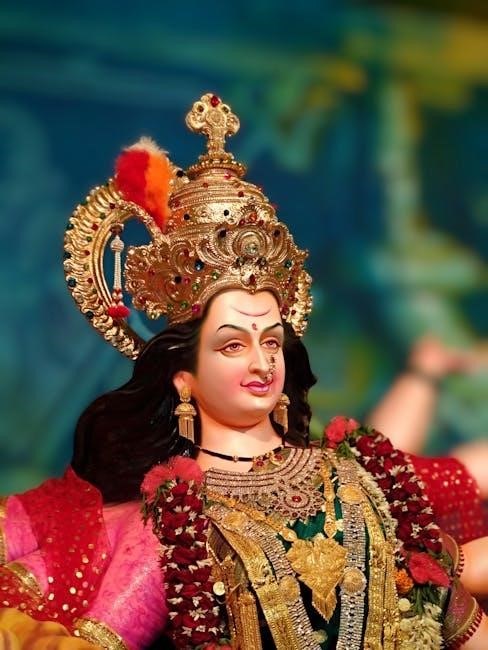
It portrays Her complexion as the color of sindoor, a vermillion red, and emphasizes Her divine beauty and power. This evocative imagery prepares the devotee for deeper contemplation. English translations within PDF documents often provide detailed explanations of the symbolism.
The Dhyanam is crucial for establishing a connection with the Goddess before commencing the chanting of the 1000 names.
Ashtakam (Eight Verses)
Following the Dhyanam, the Ashtakam – eight verses – further elaborates on Lalita Devi’s glory within the Lalita Sahasranama. Many PDF versions of the stotra include these verses prominently.
These verses act as a bridge, intensifying devotion before the recitation of the 1000 names. English translations in PDF format often offer insightful interpretations of the poetic verses. They highlight the Goddess’s attributes and Her role in the universe.
The Ashtakam prepares the mind for the expansive list of names to follow, enhancing the meditative experience.
The 1000 Names
The core of the Lalita Sahasranama lies in its 1000 names, each revealing a facet of the Divine Mother’s power and beauty. Numerous PDF versions available online present these names in Sanskrit, alongside English transliterations and meanings.
These names aren’t merely labels; they are potent mantras, capable of invoking Her grace. PDF resources often categorize the names, aiding comprehension.
Devotees utilize these names for japa, seeking spiritual growth and fulfillment. Accessing a well-formatted PDF enhances the chanting experience.
Understanding the Names
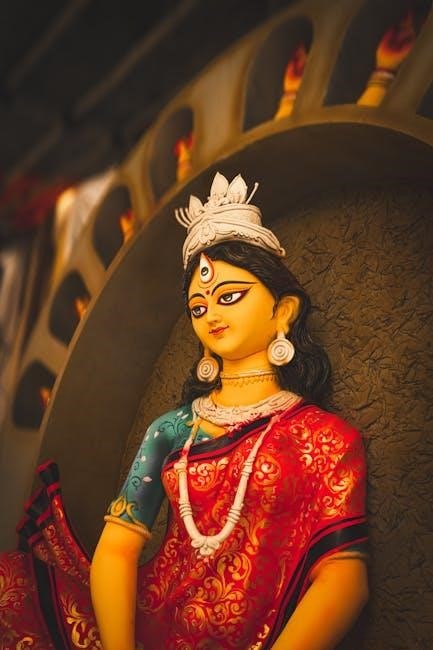
Lalita Sahasranama’s names are categorized, revealing divine power, physical attributes, and more. PDF resources with English meanings unlock deeper insights.
Studying these names fosters a profound connection with the Goddess.
Categorization of Names
Lalita Sahasranama’s 1000 names aren’t random; they’re meticulously categorized, revealing layers of the Goddess’s divine nature. These classifications aid comprehension, especially when utilizing PDF versions with English translations and commentaries.
Names relate to Shakti (power), physical form, cosmic functions, and mantras.
Some names describe her qualities, while others detail her association with the Sri Chakra.
Accessing detailed PDF resources allows devotees to systematically explore these categories, enhancing their understanding and deepening their devotional practice.
This structured approach unlocks the stotra’s profound wisdom.
Names Related to Divine Power (Shakti)
Many names within the Lalita Sahasranama directly embody the Goddess’s immense Shakti, or divine power. These names, readily accessible in English PDF translations, highlight her creative, preservative, and destructive capabilities.
Examples showcase her sovereignty and energy, like “Paramesvari” (Supreme Goddess) and “Shakti.”
Studying these names, often with commentary in PDF formats, reveals the dynamic force behind the universe.
Understanding Shakti is crucial for devotees seeking empowerment and spiritual growth.
Names Describing Physical Appearance
The Lalita Sahasranama beautifully depicts the Goddess’s physical form through numerous names, often detailed in English PDF translations. These descriptions aren’t merely aesthetic; they symbolize deeper spiritual qualities.
Names like “Sindurāruṇavigrahā” (having a reddish complexion) evoke her radiant beauty and energy.
Accessing these descriptions via PDF resources enhances understanding of Lalita Devi’s iconography.
These visual attributes, when studied, aid in meditative visualization and devotional practice.
Lalita Sahasranama in English: Translations and Resources
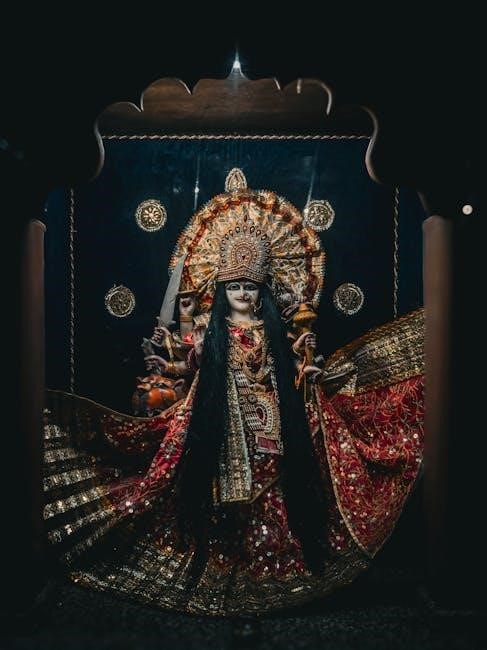
English translations of the Lalita Sahasranama are widely available, including comprehensive PDF versions with detailed commentaries for deeper study.
Internet Archive offers accessible resources.
Availability of English Translations
Numerous English translations of the Lalita Sahasranama exist, catering to diverse preferences and levels of spiritual understanding. PDF versions are particularly prevalent, offering convenient access for study and recitation.
The Internet Archive hosts a significant edition, “Lalitha Sahasranama with Meaning,” providing commentaries alongside the Sanskrit text.
Swami Tapasyananda’s book, available on Amazon, is another popular resource. These translations aim to convey the profound essence of the 1000 names, making this sacred text accessible to a wider audience.
Digital formats enhance portability and ease of use.
Popular English Translations and Commentaries
Swami Tapasyananda’s translation, available as a book, is highly regarded for its scholarly approach and insightful commentary on the Lalita Sahasranama. The Internet Archive’s “Lalitha Sahasranama with Meaning” PDF provides a comprehensive resource, blending the Sanskrit text with detailed explanations.
These translations don’t merely offer word-for-word equivalents; they strive to capture the nuanced spiritual significance of each name.
Commentaries illuminate the symbolism and deeper meanings, enhancing the reader’s understanding and devotional experience. Accessing these resources fosters a richer connection to the Divine Mother.
Online Resources for English Lalita Sahasranama
The Internet Archive stands out as a primary online repository, hosting a PDF version of “Lalitha Sahasranama with commentaries and meaning in English,” offering free access to this sacred text.
Stotra Nidhi provides access to the stotram, though it may require navigating the site to locate the English version. Various websites also offer transliterations and translations of individual names.
Devotees can find resources for chanting and studying, fostering a deeper connection with Lalita Devi.
PDF Versions and Accessibility
Lalita Sahasranama PDF versions are widely available online, offering convenient access to the text and commentaries for study and practice.
The Internet Archive provides a readily downloadable PDF, ensuring broad accessibility for devotees globally.
Finding PDF Versions Online
Numerous websites host Lalita Sahasranama PDF files, catering to devotees seeking digital access to this sacred text. The Internet Archive stands out as a reliable source, offering a comprehensive version with commentaries in English.
A quick online search using keywords like “Lalita Sahasranama PDF English” will yield several results, including options from various publishers and spiritual organizations.
Be mindful of the source’s authenticity when downloading, prioritizing reputable platforms to ensure accuracy and completeness of the text.
Quality and Authenticity of PDF Sources
Assessing the quality of Lalita Sahasranama PDF downloads is crucial. Prioritize sources offering clear text, accurate transliteration, and reliable English translations. The Internet Archive generally provides trustworthy versions.
Beware of PDFs with formatting errors or inconsistencies, as these may indicate inaccuracies. Cross-referencing with established commentaries, like those by Swami Tapasyananda, can verify authenticity.
Look for PDFs originating from respected Hindu organizations or publishers to ensure adherence to traditional scriptural standards.
Mobile Accessibility of PDF Texts
Lalita Sahasranama PDF texts are increasingly accessible on mobile devices. Utilizing PDF reader apps—like Adobe Acrobat Reader—allows for convenient chanting and study on smartphones and tablets.
Ensure the PDF is optimized for mobile viewing; features like zoom and text reflow enhance readability on smaller screens. Downloading PDFs for offline access enables uninterrupted practice, even without an internet connection.
Consider PDFs with searchable text for easy navigation to specific names or sections during mobile use.

Benefits of Chanting Lalita Sahasranama
Chanting the Lalita Sahasranama, even using PDF versions in English, unlocks spiritual growth, mental peace, and potential fulfillment of desires.
Devotees experience well-being and protection through dedicated practice of this powerful stotra.
Spiritual Benefits
Chanting Lalita Sahasranama, even utilizing readily available PDF versions in English, profoundly deepens one’s spiritual connection. This practice facilitates a closer relationship with the Divine Mother, Lalita Devi, fostering inner peace and heightened consciousness.
Regular recitation, regardless of format – physical book or digital PDF – is believed to dissolve karmic patterns and accelerate spiritual evolution. It awakens the kundalini shakti, leading to self-realization and liberation. Accessing translations allows for deeper contemplation of each divine name, enhancing the meditative experience and fostering devotion.
Mental and Emotional Well-being
Consistent chanting of the Lalita Sahasranama, even through convenient PDF access in English, offers significant mental and emotional benefits. The rhythmic recitation calms the mind, reducing stress, anxiety, and negative thought patterns.
The powerful vibrations of the names promote emotional balance and inner harmony. Studying English translations fosters a sense of peace and well-being. This practice cultivates positive energy, enhancing self-esteem and resilience, ultimately leading to a more joyful and fulfilling life.
Protection and Fulfillment of Desires
Devotees believe chanting the Lalita Sahasranama, easily accessible via English PDF versions, provides divine protection from negative energies and obstacles. The stotra’s potent mantras create a shield, safeguarding practitioners from harm and misfortune.
Furthermore, sincere recitation, with focused intention, is said to facilitate the fulfillment of righteous desires. The Goddess Lalita’s blessings are invoked, paving the way for success, prosperity, and overall well-being, as detailed in various commentaries.
Rituals and Practices Associated with Lalita Sahasranama
Lalita Sahasranama is often recited during Puja, Homa, and Japa. English PDF versions aid practice, enhancing devotion and understanding of the sacred text.
These rituals amplify the stotra’s spiritual benefits.
Puja (Worship) Rituals
Puja rituals involving Lalita Sahasranama are deeply significant, often incorporating the recitation of the 1000 names alongside offerings and devotional practices.
Devotees frequently utilize English translations, readily available as PDF downloads from sources like the Internet Archive, to follow and comprehend the stotra during worship.
These PDF versions often include detailed explanations and transliterations, aiding correct pronunciation and understanding. The stotra is central to Sri Chakra worship, enhancing its potency.
Properly conducted Puja, guided by the text, is believed to invoke the blessings of Lalita Devi, fostering spiritual growth and well-being.
Homa (Fire Sacrifice)
Homa, or fire sacrifice, performed with the recitation of Lalita Sahasranama, is a powerful purification ritual.
Devotees often use English PDF versions of the stotra, easily accessible online, to maintain accuracy during the chanting process.
The names are offered into the sacred fire, symbolizing the dissolution of impurities and the invocation of divine energy.
These PDF resources aid in correct pronunciation and understanding of the mantras, enhancing the efficacy of the Homa. It’s a potent practice for fulfilling desires and attaining spiritual liberation.
Japa (Repetition of Mantras)
Japa, the repetitive chanting of mantras, is a central practice with the Lalita Sahasranama. Utilizing English PDF versions of the text ensures accurate pronunciation and comprehension during this meditative practice.
Devotees often engage in japa to invoke the blessings of Lalita Devi, seeking spiritual growth and fulfillment of wishes.
The availability of readily downloadable PDFs facilitates consistent practice, allowing for focused recitation of the 1000 sacred names.
Lalita Devi and Her Iconography
Lalita Devi, the Divine Mother, is beautifully depicted in iconography, often referenced in PDF versions of the Lalita Sahasranama.
Understanding her symbolism enhances the devotional experience.
Her connection to the Sri Chakra is fundamental.
The Goddess Lalita: A Brief Overview
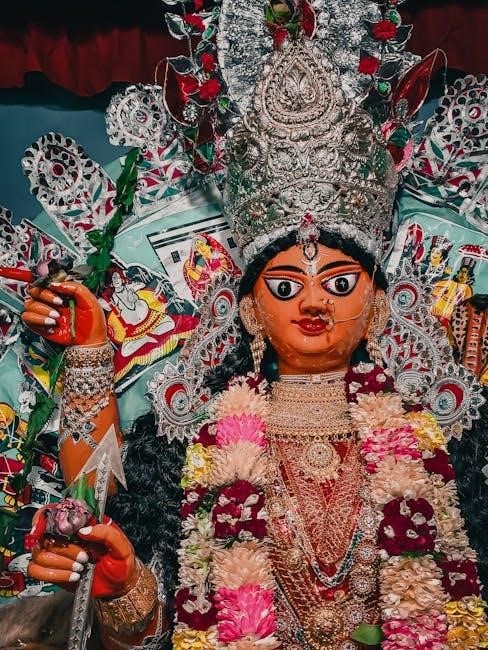
Lalita, meaning “playful,” embodies the dynamic energy of the Divine Mother, Shakti. She is often visualized as a beautiful sixteen-year-old maiden, representing the fullness of creation. The Lalita Sahasranama, available in numerous PDF English translations, meticulously details her attributes and powers;
She is the supreme goddess, worshipped as Tripurasundari, and is considered the ruler of the three worlds. Studying her iconography, often found alongside the stotra text in PDF format, deepens understanding of her complex nature and the profound spiritual benefits of chanting her 1000 names.
Symbolism in Lalita Devi’s Iconography
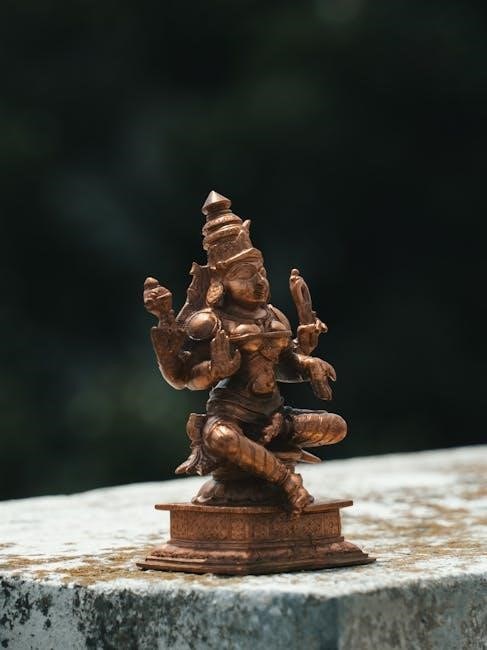
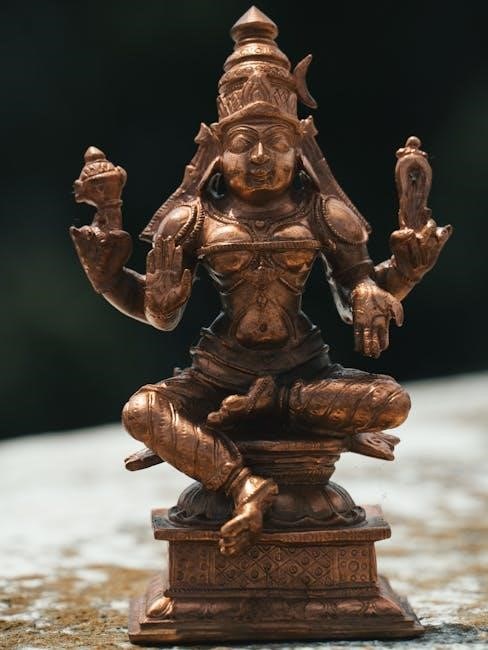
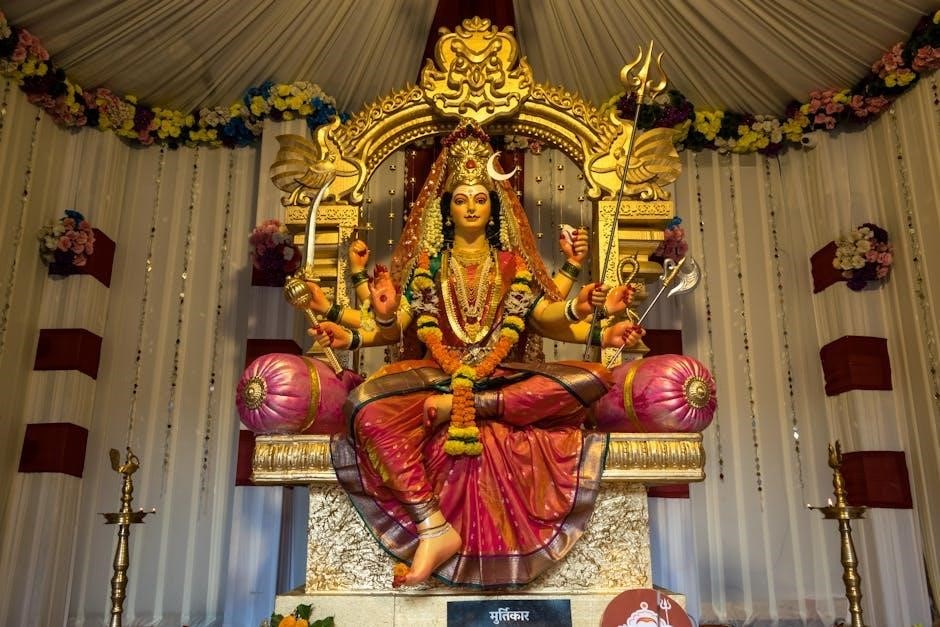
Lalita Devi’s iconography is rich with symbolism, often explained in detail within PDF versions of the Lalita Sahasranama with commentaries. Her red complexion signifies energy and passion, while her four arms represent her all-encompassing power.
She frequently holds implements like the noose, goad, and sugarcane bow, symbolizing control, attraction, and sweetness. The Sri Chakra, her sacred diagram, is integral to her worship and is often depicted alongside her image, readily available in English PDF resources.
Connection to Sri Chakra
The Sri Chakra is inextricably linked to Lalita Devi and the Lalita Sahasranama, often visually represented alongside her in depictions found within English PDF texts. It’s considered her geometric body and a potent tool for meditation.
Detailed explanations of the Chakra’s nine triangles, bindus, and gates are frequently included in commentaries accompanying the 1000 names. Studying these PDF resources reveals how each name corresponds to a specific element within the Sri Chakra, enhancing understanding.
Historical Context and Evolution
Lalita Sahasranama’s roots lie in ancient Tantric traditions, evolving within the Shakta lineage. PDF versions preserve its scriptural origins in the Brahmanda Purana.
English translations aid in tracing its historical development and enduring spiritual significance.
Ancient Roots and Development
Lalita Sahasranama’s origins are deeply embedded in ancient Hindu scriptures, primarily the Brahmanda Purana, showcasing a long evolution within Tantric traditions. The stotra’s development reflects the growth of Shakta worship, focusing on the Divine Feminine.
Early forms likely existed in Sanskrit, gradually expanding and becoming formalized over centuries. The availability of PDF versions today allows scholars and devotees to study its historical trajectory. English translations, derived from these ancient texts, further illuminate its development and enduring spiritual power, making it accessible to a wider audience.
These digital resources preserve and disseminate this sacred knowledge.
Influence of Tantric Traditions
Lalita Sahasranama is profoundly influenced by Tantric traditions, particularly those centered on Shakti – the divine feminine energy. This influence manifests in the stotra’s intricate symbolism and focus on mantras, yantras, and ritual practices.
Tantric thought emphasizes the inherent power within the Goddess, reflected in the 1000 names. Access to PDF versions of the text, alongside English translations, allows for deeper exploration of these Tantric roots. These resources reveal how the stotra serves as a powerful tool for spiritual transformation within this tradition.
Role in Shakta Tradition
Within the Shakta tradition, Lalita Sahasranama holds paramount importance as a central text for the worship of Lalita Devi, the supreme Goddess. It’s considered a foundational scripture, deeply revered by practitioners seeking connection with the Divine Mother.
English PDF versions, readily available online, facilitate wider access to this sacred text. These resources enable devotees to engage with the stotra’s powerful mantras and understand its significance within Shakta philosophy and practice, fostering devotion and spiritual growth;
Lalita Sahasranama and Other Scriptures
Lalita Sahasranama originates within the Brahmanda Purana and shares connections with the Devi Mahatmyam.
English PDF translations enhance understanding of these scriptural relationships.
These texts complement each other, enriching the devotee’s spiritual journey.
Relationship to Brahmanda Purana
Lalita Sahasranama is integrally embedded within the vast Brahmanda Purana, serving as a significant section within this comprehensive Hindu scripture. The stotra, detailing the 1000 names of Lalita Devi, is considered a core component of the Purana’s teachings on the Divine Feminine.
Accessing English translations, often available as PDF documents, allows devotees to explore this connection directly. These resources illuminate how the Sahasranama expands upon the broader cosmological and theological themes presented in the Brahmanda Purana, offering a focused path to understanding Shakti’s power.
Studying both texts together provides a richer, more nuanced appreciation of Lalita’s divine nature.
Connections to Devi Mahatmyam
While distinct, Lalita Sahasranama shares a profound thematic resonance with the Devi Mahatmyam, both celebrating the Divine Mother’s power and glory. The Sahasranama elaborates on the energies and attributes hinted at within the Mahatmyam’s narratives of Devi’s victories over demons.
English PDF versions of the Sahasranama often include commentaries that draw parallels to episodes in the Devi Mahatmyam, enriching understanding. Both scriptures emphasize the importance of Shakti and Her role in cosmic order, offering complementary paths to devotion.
Studying them together deepens spiritual insight.
Influence on Other Stotras
Lalita Sahasranama’s extensive catalog of names and attributes has profoundly influenced numerous subsequent stotras dedicated to the Divine Mother. Many later compositions borrow names and concepts directly from the Sahasranama, expanding upon its themes of power, beauty, and grace.
English PDF translations often reveal these connections through comparative analysis. The Sahasranama serves as a foundational text, shaping the devotional landscape for Shakta traditions.
Its impact is evident in the structure and content of related hymns.
Uttara Peetika: The Concluding Verses
Uttara Peetika, revealed by Hayagriva, explains the Sahasranama’s secrets. PDF English versions include these verses, emphasizing the text’s sacred and confidential nature.
It highlights Lalita’s profound impact on devotees.
Hayagriva’s Explanation
Hayagriva, a divine avatar, elucidates the profound mysteries embedded within the Lalita Sahasranama. His explanation, found in the Uttara Peetika, unveils the significance of each name and its connection to the Goddess Lalita’s divine power;
Many PDF versions in English incorporate Hayagriva’s commentary, offering readers a deeper understanding of the stotra’s esoteric meanings. These translations clarify the subtle nuances and reveal the inherent benefits of reciting these sacred names. Accessing these resources enhances spiritual practice and devotion.
Significance of the Uttara Peetika
The Uttara Peetika, the concluding section of the Lalita Sahasranama, holds immense importance, revealing the stotra’s core secrets. It’s considered a ‘revelation of secrets’ by Hayagriva, enhancing the text’s potency.
English PDF versions often include this section, providing context and deeper meaning. The Peetika emphasizes the stotra’s unique nature and the importance of maintaining its secrecy, ensuring its sacredness is preserved for dedicated practitioners seeking divine grace.
The Importance of Secrecy
The Uttara Peetika stresses the secrecy surrounding the Lalita Sahasranama, deeming it a ‘secret of secrets’ revealed by Hayagriva. This isn’t about concealment, but protecting the stotra’s power from misuse.
English translations, even in PDF format, should be approached with reverence. Maintaining the sanctity of the text ensures its efficacy for sincere devotees. This emphasis on secrecy underscores the stotra’s profound spiritual depth and transformative potential.
Practical Guide to Chanting
Chanting requires preparation, correct pronunciation, and a dedicated frequency. PDF resources aid learning.
Regular practice, guided by English translations, unlocks the stotra’s benefits for spiritual growth and well-being.
Preparation for Chanting
Before commencing the Lalita Sahasranama chanting, creating a serene environment is crucial. A clean space, free from distractions, enhances focus. Studying an English translation, perhaps from a PDF version available online, familiarizes you with the names and their meanings.
Consider a ritual bath and wearing clean clothes.
Anganyasa and Karanyasa, preliminary purification practices, are recommended.
Offer a small token of devotion – flowers, incense, or a lit lamp – to Lalita Devi.
Mental preparation involves setting a clear intention for your chanting, whether it’s for personal growth, healing, or fulfilling desires.
Correct Pronunciation
Accurate pronunciation is vital when chanting the Lalita Sahasranama. Utilizing an English transliteration alongside a PDF containing the Sanskrit text aids in correct articulation. Many online resources offer audio pronunciations of the names, assisting with unfamiliar sounds.
Focus on clear enunciation of each syllable.
If possible, learn from a knowledgeable teacher or guru.
Consistent practice refines pronunciation over time.
While perfect accuracy isn’t immediately attainable, sincere effort and mindful repetition are highly valued.
Recommended Frequency and Timing
Chanting the Lalita Sahasranama’s frequency depends on individual capacity and goals. Daily recitation, even a portion, is beneficial. Many devotees chant during specific times, like dawn or dusk, considered auspicious. Utilizing a PDF version allows for convenient practice anytime.
Consistency is key, rather than sporadic, lengthy sessions.
Some prefer chanting all 1000 names, while others focus on select names.
Aligning chanting with personal rhythms enhances its impact.
Regular practice, guided by an English translation, deepens connection.